


What is a manometer?
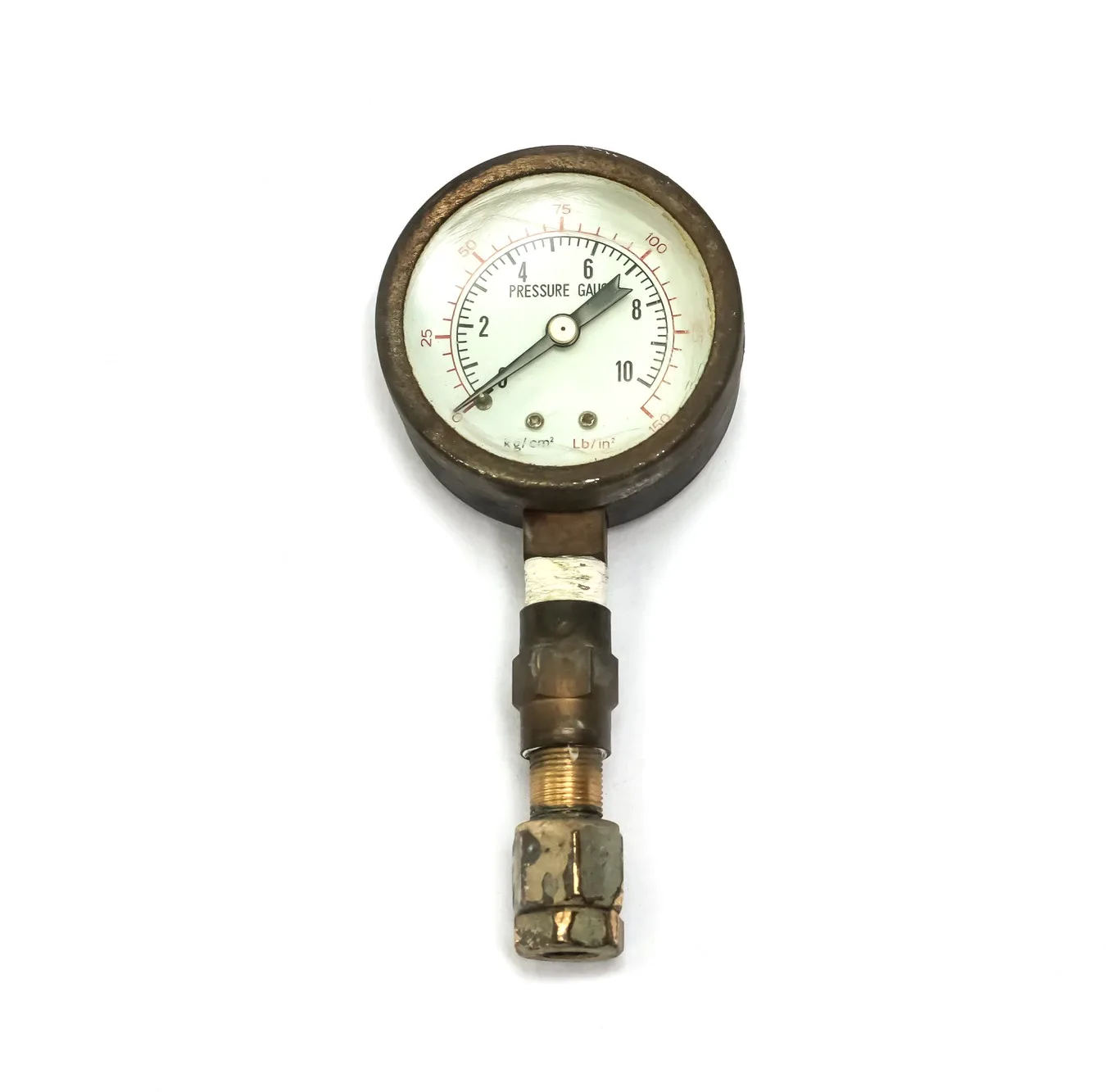
A manometer is an instrument for pressure measurement in fluids (liquids and gases) in closed circuits.
They measure the difference between the real or absolute pressure and the atmospheric pressure, calling this value gauge pressure.
Before getting into the reason for the failures and how to solve them, it is important to first understand the internal workings of a mechanical meter, the most popular of which is the Bourdon tube manometer.
All pressure gauges have a sensing element or elastic element that changes some property when subjected to pressure. This change is manifested on a scale or screen calibrated directly in the corresponding pressure units.
The Bourdon tube is a C-shaped hollow spring inside the case. As the tube receives pressure from the media entering it, it tends to straighten. This movement is transmitted to a mechanism, attached to the Bourdon tube through the connecting link, in a pressure measurement that is indicated on the needle.
Manometers are an integral part of an application’s alert system. By constantly measuring pressure, these instruments allow users to see how a process is going. The pressure gauges are robust and can operate in difficult conditions. However, even the toughest instruments will experience failure if used in inappropriate applications or conditions.
Causes of pressure gauge failures
When a pressure gauge does not perform as expected, the cause may come from at least one of these reasons:
-
Mechanical vibrations of the pressure gauge
Vibration is the main cause of failure of a pressure gauge, numerous studies have proven this statement. Vibration has a negative impact on the accuracy of the pressure gauge and its operation; It is difficult to read the needle indication when the pressure gauge is vibrating. Additionally, continued damage to the mechanism from vibration can eventually move the zero needle and/or produce inaccurate readings.
Another consequence of exaggerated vibration is that the needle could come loose from its axis and small particles (metal dust) could also be present inside the instrument from the wear of the pinion and gear segments, which could jam the mechanism.
Solution
Almost always filling the instrument with some viscous liquid is the most convenient and cost-effective way to protect pressure gauges from vibration, generally glycerin or silicone is used. The glycerin or silicone oil filling acts as a shock absorber to slow movement. They also lubricate the pinion and other internal parts, reducing wear and extending the life of the gauge. A second solution is to move the gauge away from the source of the vibration, using a capillary seal.

-
Pulsations
Pulsation refers to rapid rhythmic increases and decreases in the pressure of the medium. The main visible signs of a pulsation are the indicator fluttering or the Indicator being loose or in extreme cases, broken. Like excessive vibrations, pulsations can cause difficulty in obtaining an accurate reading and wear of internal components.
Solution
As with vibrations, filling the instrument with liquid also applies for pulsations, but the best solution is restrictor screws and pulsation dampers or snubbers.

-
Extreme temperatures
Different gauges have different tolerances for extreme temperatures. We refer to both ambient temperatures and the temperature of the process medium.
Visible signs of extreme temperature:
The viewfinder, face, and/or filling fluid become discolored or turn a color usually yellow, orange, brown, or black. Additionally, the cover, case or display may melt because the medium is too hot.
The risks that come with exposure to extreme temperature are difficulty obtaining an accurate reading and loss of accuracy and functionality.
Solution
A diaphragm seal with capillary is the best solution, as it allows pressure measurement to occur at a distance from extreme ambient or medium temperatures. The longer the stroke, the more heat is dissipated before the pressure reaches the gauge.
Other alternatives are cooling towers and pigtail siphons.

Glycerin is the most commonly used filling fluid for pressure gauges, but for extremely cold or hot ambient temperatures, silicone oil is the best option, as over time, it will not discolor from heat or freeze in sub-zero environments.
- Pressure peaks
Surges occur when pressure rises sharply and then drops suddenly, which can cause all kinds of problems for gauges not designed for this condition.
Visible signs of pressure spikes:
- A bent indicator, like a fishtail or a hook, the result of frequent percussion or abrupt tripping of the needle on the stop bolt.
- Indicator broken or severely hit on the stop.
- Broken stop bolt.
Risks associated with pressure peaks:
- Increased wear due to the exaggerated movement of the components.
- Loss of precision and functionality.
- Bourdon tube split, releasing the media.
Solution
As with pulsation, a good solution to dampen the effects of pressure spikes is to use a liquid-filled manometer and/or accessories such as restrictors or dampers. Another way to prevent damage to the gauges and internal parts is to replace the pressure gauge with one that has a higher pressure range. A good rule of thumb is to choose a pressure gauge that can operate at twice the maximum expected pressure.
- Corrosion
Many industries work with aggressive chemicals: hydrofluoric acid in refineries, flocculants and chlorine in wastewater treatment, chlorinated gases in fiber optic production, etc.
The main sign of corrosion is the discoloration and deterioration of the indicator case, needle, connection and face, leading to loss of precision and functionality.
Solution
Isolate the pressure gauge from aggressive chemicals using a diaphragm seal made of appropriate corrosion-resistant materials: 316L and 316 TI stainless steels, Hastelloy®, Monel®, Inconel®, tantalum, and titanium. Metals can be left as is or, for added protection, coated with Teflon® or gold.
- Misuse and/or abuse
The gauges appear sturdy, especially the larger process gauges, but they are not designed to be handholds or fulcrums. Evidence of mistreatment of meters is often seen. Operators hold onto a meter while moving objects in their process, or lean on them with their feet to climb a structure. This practice is not only unsafe, but increases the chances of meter damage and failure.
The following are signs of misuse and/or abuse: Cracked case, broken sight glass, leaking fill fluid, twisted or bent pressure gauge and/or process connection. All this leads to the loss of functionality of the pressure gauge.