


The Right Accessory for Any Pressure Instrument Application
To avoid misapplication, pressure instruments should be selected taking into account the process operating conditions, operating conditions, and environment. Incorrect application can be detrimental to the instrument, process and personnel. Pressure fittings are often essential to protect instruments and personnel, increase instrument life and provide a higher level of performance and protection.
- Mechanical vibrations
Mechanical resonance is the leading cause of pressure instrument failure, as vibrations cause inaccurate readings on pressure gauges and permanent damage to switches and transmitters; In gauges, this manifests itself as metal shavings inside the housing, misaligned pointers that do not return to zero, or completely detach from the shaft, while in transmitters, vibrations alter accuracy and calibration, causing components to dislodge and resulting in incorrect readings and electrical damage.

For most situations, filling the meter with liquid under pressure will help mitigate vibration problems:
Filling the housing with glycerin acts as an insulator, protecting and lubricating the internal parts of the meter. This reduces wear and extends the life of the pressure gauge. Likewise, Winters offers the StabiliZR® system as a value-added alternative.
Another option is to mount the pressure instrument remotely: By using a capillary, the instrument can be installed away from the source of vibration.
- Pulsations and pressure peaks
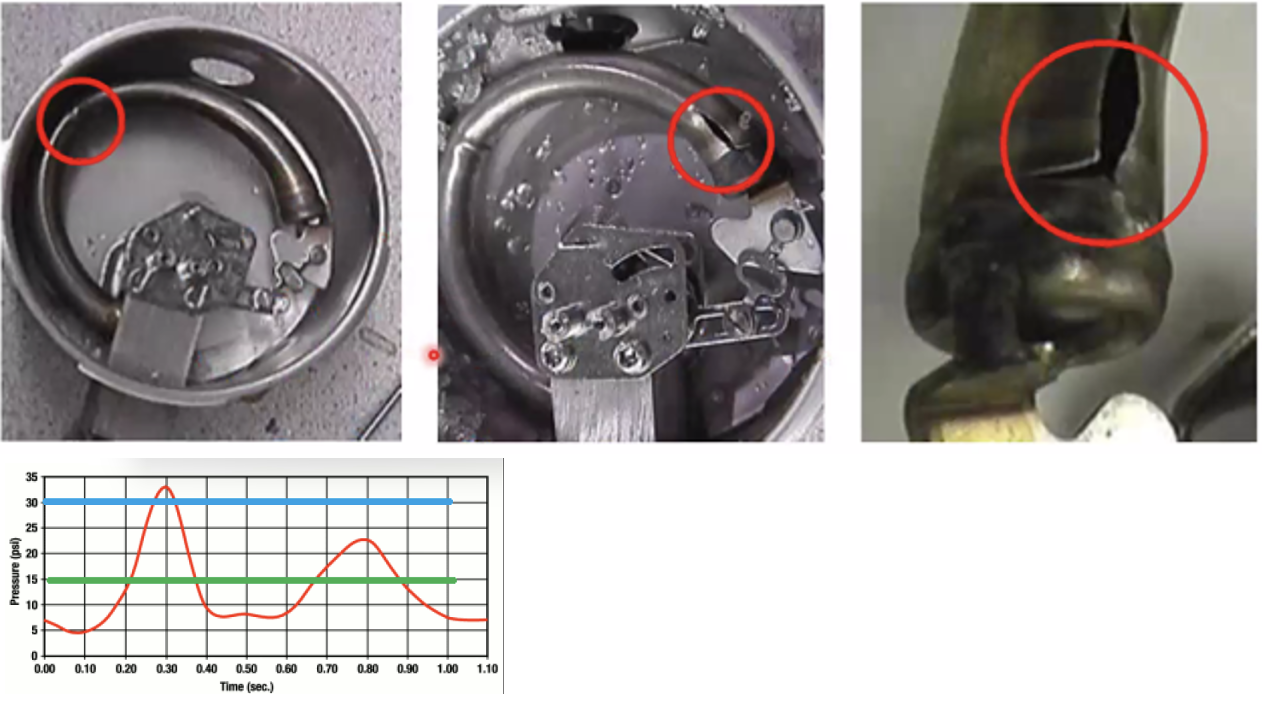
Pulsation, which is a rapid increase and decrease in pressure, commonly occurs at startup or during changes in the system, and its effects are similar to those of vibration: inability to measure pressure accurately, deterioration of the pressure instrument, and failures that can lead to process shutdown. They can trigger the breakage of the bourbon tube.
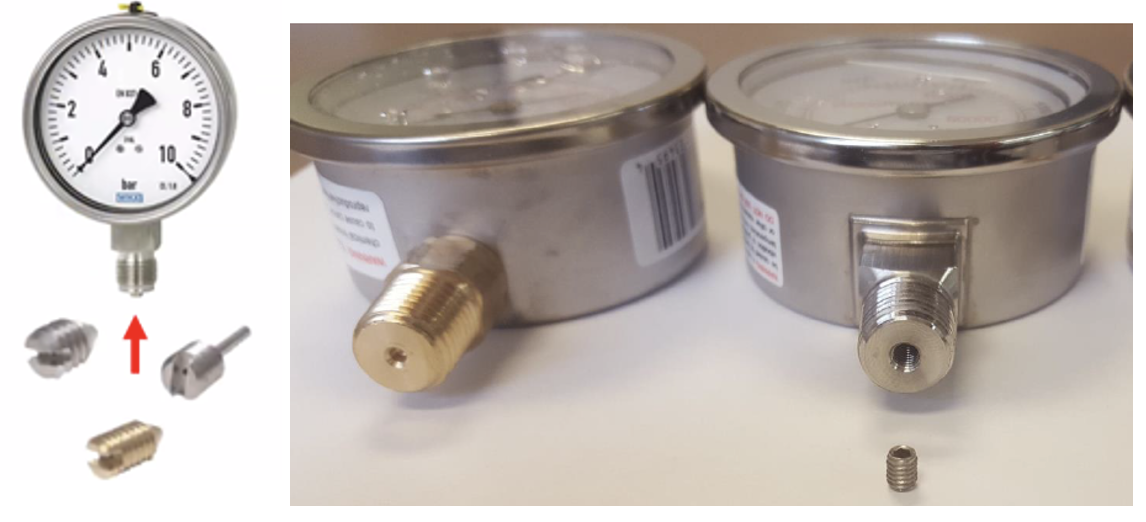
1. Restrictor screws are a simple, low-cost solution for pressure gauges.
2.Snubbers, used to protect instruments from sudden pressure changes such as pressure spikes, water hammer and pulsations, function similarly to restrictive orifices. They come in various material variants, connection sizes, pressure ratings and can be specified for different applications such as air, water or oil, with adjustable ones offering greater flow control.
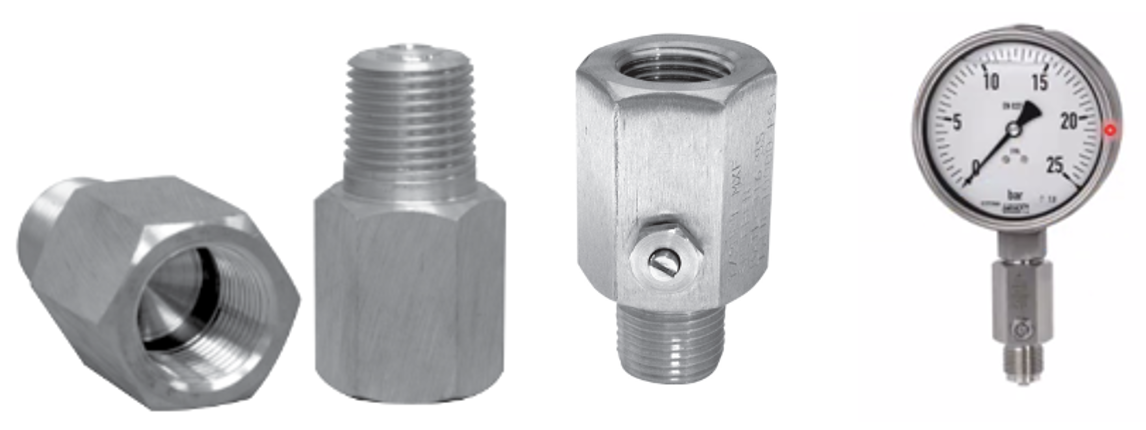
3.The needle, block and bleed valves also control the flow, reducing the effect of pulsations. The handle design allows for gradual opening of the flow path, helping to prevent sudden pressure spikes and instrument damage. Additionally, they facilitate safe maintenance or replacement of the instrument.

- The high process temperature is detrimental to pressure instruments
Heat, whether from the environment or transferred from the process fluid, affects instruments, causing discoloration in pressure gauges and, in the long term, loss of precision and functionality.
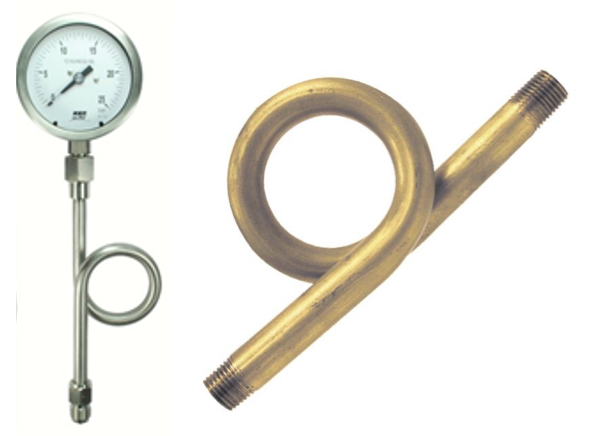
1. A simple device that protects a pressure gauge from high-temperature media is the siphon, which reduces the detrimental effects of rapid pressure changes by condensing the pressure medium in its coiled portion into media such as steam. It is available in various materials and process connections. It is recommended up to 120ºC fluid temperature.
2.The cooling towers, which act as radiators, dissipate the heat of the fluid as it circulates through its spiral towards the pressure sensor, reducing temperatures of up to 500 °C to allowable working levels.

3.Chemical diaphragm seals or separator systems can be used for processes with gases, compressed air or steam, with liquid, chemical, pasty, powder and crystallizing media as well as aggressive, adhesive, corrosive, highly viscous, environmentally harmful or toxic media.

The maximum recommended temperatures for the pressure gauge process are 60ºC for wet parts. Siphons, cooling towers, and capillaries are appropriate in processes where media reach temperatures above 212°F (100°C). An accessory is necessary to prevent damage to the instrument and maintain its performance and precision.
Safe diaphragm seal selection: It is very important to choose the correct diaphragm seal instrument; Whose manufacturing materials and other specifications are chemically and functionally compatible with each application. Proper attention to diaphragm seal system selection, installation, operation and maintenance is crucial to ensure safe and proper performance. The experience of your process system designer is vital in this regard.